
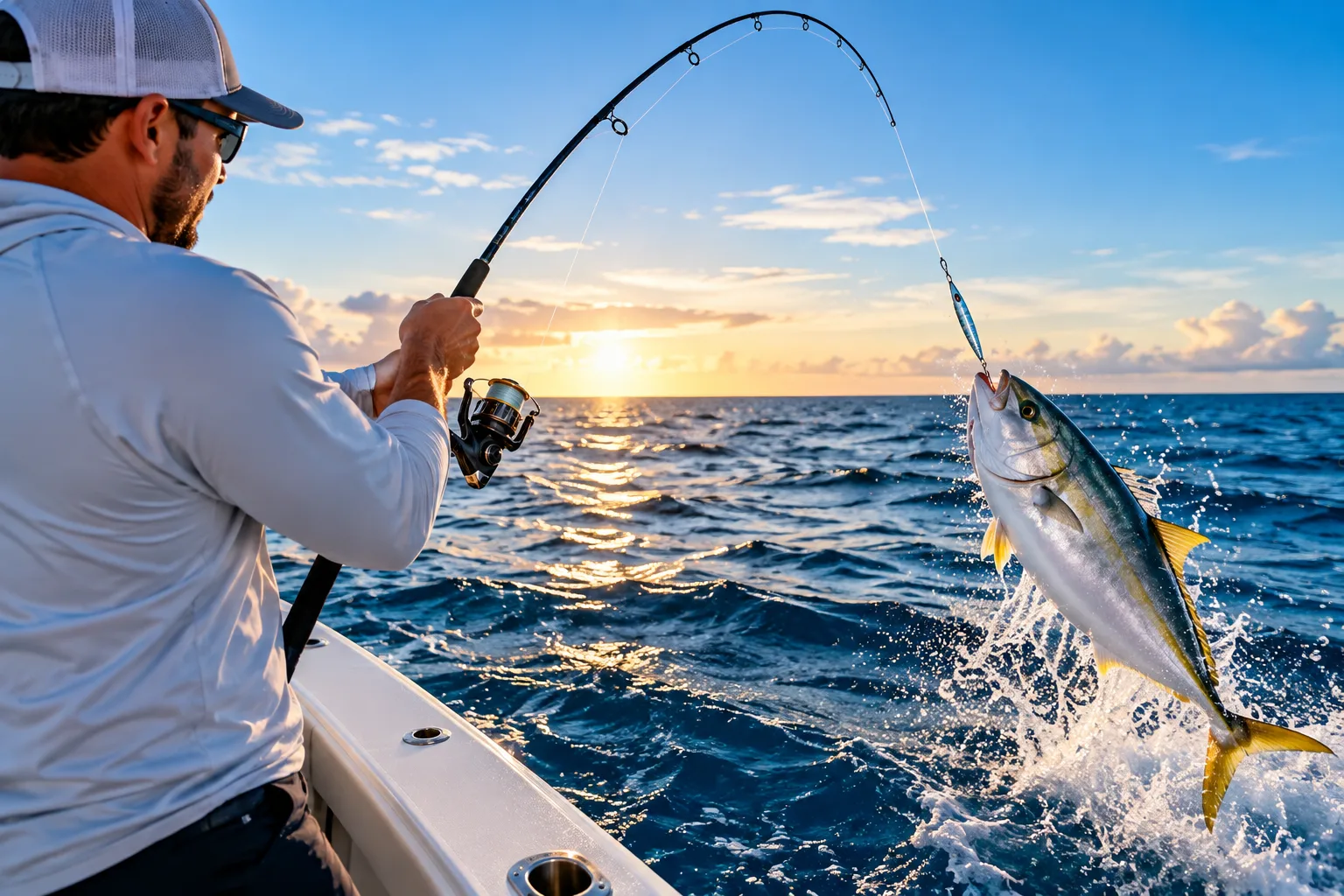
Fishing has many techniques, and each one is suited to different fish, water conditions, and types of tackle. Some methods involve leaving bait in one place and waiting for a fish to find it. Others are much more active, requiring the angler to move the lure through the water to attract attention.
Jigging is one of those active fishing methods. It can be used in freshwater and saltwater and can target a wide range of fish. The basic idea is simple: an angler moves a weighted lure up and down or through the water in a way that makes it look like injured or fleeing prey.
The technique can be used from a boat, shoreline, pier, or other fishing location. It can also be adapted to different depths, species, and conditions.
Key Takeaways
- Jigging uses a weighted lure that is moved through the water to attract fish.
- The technique can be used in both freshwater and saltwater for many different species.
- Jigs come in different sizes, weights, shapes, and colors for different fishing conditions.
- Changing the lure’s depth, speed, movement, and pauses can help attract more fish.
- Jigging can be done from boats, shorelines, piers, and other fishing locations.
What Is Jigging?
Jigging is a fishing technique that uses a weighted lure, commonly called a jig, and controlled movements to attract fish.
Instead of simply casting the lure and retrieving it at a constant speed, the angler changes the movement of the lure. The jig may be lifted, dropped, paused, or moved through the water at different speeds.
The movement creates an action that can attract predatory fish.
The exact technique depends on the type of jig being used and the fish being targeted. Some jigs are designed for shallow water, while others are heavy enough to reach deep offshore areas.
What Is a Jig?
A jig is a type of fishing lure designed around a weighted head or body. Many jigs also have hooks and some type of material attached to them to create movement and attract fish.
Jigs come in many shapes, sizes, colors, and weights.
Some are designed to imitate small fish. Others can resemble shrimp, squid, crabs, insects, or other prey.
The design of the jig affects how it moves through the water. Some fall quickly, while others flutter or glide as they sink.
Choosing the right jig depends on the depth, current, target species, and type of fishing you are doing.
How Does Jigging Work?
The basic method is to get the jig to the depth where fish are likely to be located and then move it in a controlled manner.
An angler might lift the rod tip, allowing the jig to rise through the water. The lure is then allowed to fall back down. This movement can be repeated while the angler watches the line for signs of a bite.
The fish may strike when the jig is moving upward, during the fall, or immediately after a pause.
This is one reason anglers pay close attention to their line. A bite can sometimes feel like a small tap or a sudden change in tension.
Why Do Fish Strike a Jig?
Fish may strike a jig because its movement resembles something they naturally feed on.
A jig can imitate prey that is injured, escaping, or moving through the water.
The sudden movement can also trigger a predatory response. A fish does not always need to be actively feeding for an unusual movement to attract its attention.
Different species respond to different movements, so anglers often experiment with speed, depth, pauses, and the length of each lift.
Types of Jigging
There are several styles of this fishing method. The technique can be adjusted depending on where you are fishing and what species you want to catch.
Vertical Jigging
Vertical jigging is commonly used from a boat.
The jig is dropped straight down toward the desired depth. The angler then lifts and lowers the lure while keeping the line relatively vertical.
This method works especially well in deeper water because it allows the angler to keep the lure near a particular depth.
It is commonly used for saltwater species and can be effective around reefs, wrecks, and other underwater structures.
Casting and Jigging
Jigs can also be cast from shore or a boat.
After casting, the angler allows the lure to sink to a desired depth before beginning the retrieve. The rod can be lifted and lowered to give the lure an up-and-down movement.
This method is useful when fish are spread across a larger area.
Slow Jigging
Slow jigging uses controlled movements rather than fast, aggressive lifts.
The lure is allowed to fall in a natural-looking way, often with pauses between movements.
This approach can be useful when fish are not responding to fast-moving lures.
Fast Jigging
Fast jigging involves moving the lure quickly through the water.
It is commonly associated with offshore fishing for aggressive predatory species. The rapid movement can imitate a small fish trying to escape.
The amount of effort required can be significant, particularly when using heavy tackle in deep water.
What Fish Can You Catch With Jigs?
One of the biggest advantages of jigs is their versatility.
Freshwater anglers can use them to target bass, walleye, crappie, trout, pike, and other species.
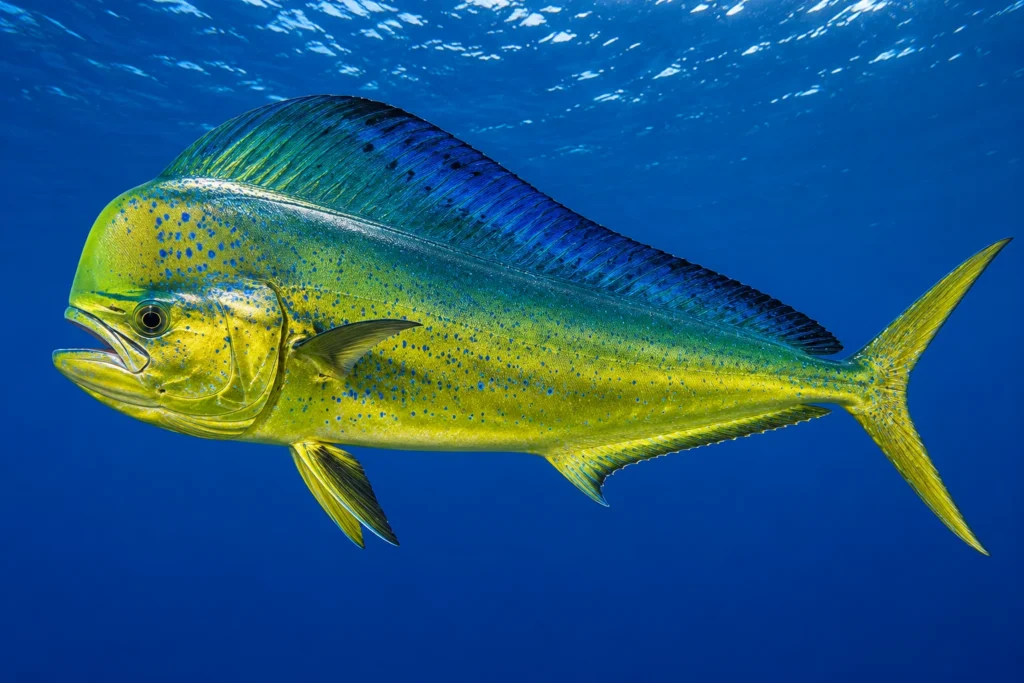
In saltwater, jigs can be used for species such as snapper, grouper, amberjack, tuna, kingfish, and various reef and pelagic fish.
The appropriate lure size and style can vary considerably between species.
For example, a small jig may work well when fish are feeding on small baitfish, while a larger jig may be needed for deep-water species.
Choosing the Right Jig
The right jig depends on several factors.
Water Depth
A heavier jig is generally useful when fishing deeper water because it can reach the desired depth more quickly.
A lighter jig may be better for shallow water or areas with little current.
Current
Strong current can make it difficult to keep a lightweight jig in the strike zone. A heavier lure may help maintain better control.
Target Species
The size of the fish you are targeting should influence the size and strength of your tackle.
The local food source also matters. If fish are feeding on small baitfish, a smaller jig may be more appropriate.
Water Clarity
Color can sometimes make a difference depending on water clarity and light conditions.
In clear water, natural-looking colors can be useful. In darker or murkier water, brighter colors or stronger contrast may help the lure stand out.
There is no single color that works in every situation, so experimenting can be useful.
What Rod and Reel Do You Need?
The tackle needed depends on the type of fishing.
Light jigs can be used with relatively light spinning tackle. Heavier offshore jigs require stronger rods, reels, and lines.
A jigging rod is generally designed to handle the repeated lifting and dropping of a lure.
The reel should have enough line capacity and a drag system appropriate for the fish being targeted.
Braided fishing line is commonly used for many jigging applications because it has relatively little stretch and allows anglers to feel changes in the lure and line more easily.
A leader may also be used, particularly when fishing around sharp structure or species with abrasive teeth.
How to Jig a Lure
There is no single movement that works everywhere, but beginners can start with a simple technique.
- First, cast the jig or lower it to the desired depth.
- Let the lure settle for a moment.
- Lift the rod tip to move the jig upward.
- Then lower the rod while allowing the lure to fall.
- Repeat the movement while maintaining contact with the lure.
- Pay attention during the fall because fish may strike when the jig is dropping.
- As you gain experience, you can experiment with faster lifts, slower movements, longer pauses, and different retrieve speeds.
Where Should You Jig?
Structure is often an important factor.
Fish frequently use reefs, rocks, wrecks, drop-offs, ledges, vegetation, and other underwater features.
In saltwater, anglers may jig around reefs and wrecks where predatory fish gather.
In freshwater, underwater points, weed edges, submerged trees, and changes in depth can be productive areas.
Using a fish finder from a boat can help identify depth changes and underwater structure.
The goal is to present the jig where fish are likely to be located rather than simply moving it randomly through the water.
Jigging From a Boat
Fishing from a boat provides several advantages.
You can move directly over deeper water and lower a jig vertically. This allows you to target specific depths and structures.
Boat anglers can also use a fish finder to locate baitfish and larger fish.
If the boat is drifting, the angler may need to adjust the jig weight to maintain control as the boat moves with the current.
Positioning the boat correctly can make a major difference.
Jigging From Shore
You do not need a boat to use this technique.
Shore anglers can cast jigs around rocks, docks, piers, channels, drop-offs, and other areas where fish may gather.
The key is choosing a jig that can reach the desired depth without getting constantly caught on the bottom.
A controlled retrieve can help keep the lure in the strike zone while reducing unnecessary snags.
Common Mistakes Beginners Make
One common mistake is moving the lure too quickly.
Some fish respond to fast movement, but others may prefer a slower presentation.
Another mistake is failing to watch the line. Not every bite produces a strong pull. A fish may take the lure while it is falling, creating only a small change in line tension.
Using the wrong jig weight can also make fishing difficult. A jig that is too light may not reach the desired depth, while one that is too heavy can make the presentation unnatural.
Finally, anglers sometimes change lures too quickly without giving a technique enough time to work. It can be useful to experiment systematically with depth, movement, and speed.
Is Jigging Good for Beginners?
Yes. The basic technique is easy to learn, although becoming skilled at it takes practice.
A beginner can start with a simple jig and learn how different movements affect the lure.
As experience grows, anglers can learn to control the lure more precisely and recognize how fish respond to different presentations.
Starting with lighter tackle and smaller jigs can also make it easier to learn the basic movements.
FAQs About Jigging In Fishing
Can jigging be done in shallow water?
Yes. Jigs can be used in shallow water as long as the lure is appropriate for the depth and conditions.
Is jigging better in clear or murky water?
Jigging can work in both. Lure color, size, movement, and contrast may need to be adjusted depending on water visibility.
What time of day is best for jigging?
Early morning and late afternoon can be productive periods for many fish, but the best time varies by species, location, season, weather, and water conditions.
How do you know when a fish hits a jig?
A strike may feel like a tap, sudden heaviness, a change in line tension, or an unexpected movement of the line. Some bites can be subtle.
Can you use live bait with a jig?
Yes. Some anglers add natural bait to certain jigs to provide additional scent and attraction. Whether this works well depends on the species and local fishing conditions.
What color jig should a beginner use?
A natural-looking color is a practical starting point in many situations. You can then experiment with brighter or darker colors based on water clarity and fish activity.
How far should you cast a jig?
There is no fixed distance. The important factor is getting the lure into an area where fish are likely to be feeding or holding.
Can you use a jig with a spinning reel?
Yes. Spinning tackle can be used with many lightweight and medium-sized jigs, particularly for freshwater and lighter saltwater fishing.
How often should you change a jig?
There is no set schedule. Change the jig when conditions change, fish stop responding, the lure is damaged, or you want to try a different size, weight, or presentation.
Can jigging be used for fishing around reefs?
Yes. Jigs are commonly used around underwater structures such as reefs, but anglers need to control the lure carefully to reduce the chance of getting it caught on the bottom.
Conclusion
Jigging is a versatile fishing technique that can be used in many different environments. Its basic principle is straightforward: use a weighted lure and move it through the water in a way that attracts fish.
The technique can be as simple as lifting and dropping a small jig in freshwater or as demanding as working a heavy lure in deep offshore water.
Success comes from understanding the conditions, choosing suitable tackle, finding areas where fish are likely to be present, and adjusting the lure’s movement when necessary.
For anglers who enjoy active fishing and want to experiment with different presentations, learning how to use jigs can add another useful technique to their fishing skills.