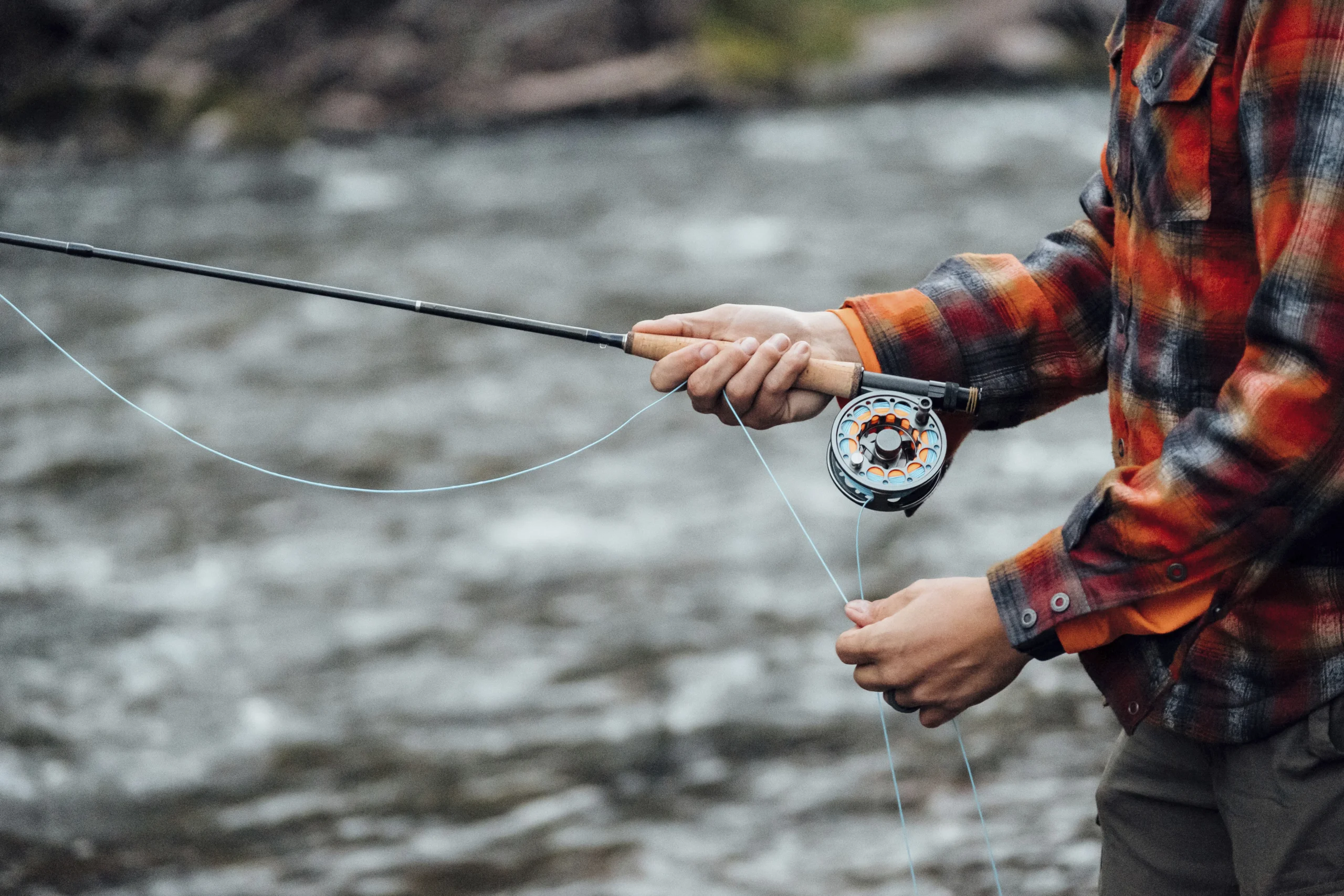
Fly fishing is a type of fishing that uses a specially designed rod, reel, and weighted line to present a lightweight artificial fly to fish. Unlike conventional fishing, where the weight of the lure or bait helps carry the line through the air, fly fishing relies mainly on the weight of the fly line to make a cast.
At first, fly fishing can look complicated. There is a different kind of rod, a different reel, unusual-looking flies, and a casting motion that may seem unfamiliar. Once you understand what each part does, however, the basic idea is fairly simple.
Fly fishing can be done in rivers, streams, lakes, ponds, and saltwater. It can be used to catch trout, bass, salmon, panfish, carp, bonefish, tarpon, and many other species.
Key Takeaways
- Fly fishing uses a weighted fly line to cast lightweight artificial flies that imitate natural food.
- Common fly types include dry flies, nymphs, streamers, and wet flies, each designed for different fishing situations.
- Fly fishing can be done in rivers, streams, lakes, ponds, and saltwater for many different fish species.
- Choosing the right rod, reel, line, leader, and fly depends on the fish you are targeting and where you plan to fish.
- Beginners can start with basic equipment and learn through casting practice, observing the water, and spending time on the water.
How Does Fly Fishing Work?
The basic idea is to present an artificial fly in a way that resembles something a fish might naturally eat.
A fly can imitate insects, baitfish, crustaceans, worms, or other food sources. Some flies are designed to float on the surface, while others sink below it.
The angler uses a fly rod and fly line to cast the fly toward a likely feeding area. Once the fly is on the water, the angler controls the line and watches for a fish to take it.
When a fish eats the fly, the angler sets the hook and then uses the rod and reel to bring the fish under control.
The process sounds simple, but fly fishing has many techniques because fish behave differently depending on the species, season, water conditions, and available food.
What Equipment Do You Need for Fly Fishing?
You do not need a huge collection of equipment to start.
The basic setup includes a fly rod, fly reel, fly line, leader, tippet, and flies.
| Equipment | Main Purpose |
| Fly rod | Used for casting and fighting fish |
| Fly reel | Holds the fly line and backing |
| Fly line | Provides the weight needed for casting |
| Backing | Provides additional line if a fish runs far |
| Leader | Connects the fly line to the fly |
| Tippet | Thin section attached near the fly |
| Flies | Artificial patterns used to attract fish |
| Forceps | Useful for removing hooks |
| Nippers | Used to cut line and tippet |
| Landing net | Helps land fish safely |
Other equipment can be useful, but beginners can start with the basics.
What Is a Fly Rod?
A fly rod is designed specifically for casting fly line.
Fly rods are generally lighter and more flexible than conventional fishing rods. They come in different lengths, weights, and actions.
The rod weight is normally written as a number, such as 3-weight, 5-weight, or 8-weight. This does not refer to the physical weight of the rod. Instead, it refers to the weight of fly line the rod is designed to cast.
A 5-weight setup is one of the most common choices for general freshwater fly fishing because it can handle a wide range of situations.
Smaller rods and lighter line weights are often used for small streams and smaller fish. Heavier rods are used when targeting larger fish or fishing in windy conditions.
What Is a Fly Reel?
The fly reel holds the fly line and backing.
Unlike a spinning reel, a fly reel does not normally provide the main force for casting. The angler’s casting motion and the fly line do most of that work.
The reel becomes particularly important when fighting larger fish. A fish that makes a long run can pull line from the reel, and the drag system helps control that line.
For small fish, an angler may rarely use the reel during a fight. For larger species, the reel can become much more important.
What Is Fly Line?
Fly line is one of the most important parts of a fly-fishing setup.
The line provides the weight needed to load the fly rod during casting. This is one of the biggest differences between fly fishing and conventional fishing.
Fly lines come in different designs. Floating lines are commonly used for surface fishing and many general freshwater applications. Sinking lines are designed to take flies deeper.
There are also specialty lines for different casting situations and types of fishing.
The line weight needs to match the rod and reel setup according to the manufacturer’s specifications.
What Is a Leader?
The leader connects the heavier fly line to the much thinner section of line near the fly.
A typical leader is tapered, meaning it starts thicker near the fly line and becomes thinner toward the fly.
This gradual change helps transfer energy from the fly line through the leader and toward the fly.
Leaders come in different lengths and strengths. The right choice depends on the type of fish, fly, water, and presentation being used.
What Is Tippet?
Tippet is the thin line attached to the end of the leader.
It is usually made from nylon or fluorocarbon.
When a fly is changed repeatedly, the end of the leader becomes shorter. Instead of replacing the entire leader, anglers can add new tippet.
Tippet is available in different diameters and breaking strengths. Smaller flies generally require thinner tippet, while larger flies and stronger fish require heavier material.
What Are Fly Fishing Flies?
A fly is an artificial lure designed to resemble something fish eat.
There are thousands of fly patterns, but most fall into a few broad categories.
Dry Flies
Dry flies float on the surface of the water.
They commonly imitate insects that land on or emerge from the surface. When fish are feeding on top, dry flies can provide some of the most exciting visual fishing.
Seeing a trout rise and take a dry fly is one of the experiences that attracts many people to fly fishing.
Nymphs
Nymphs imitate aquatic insects during the underwater part of their life cycle.
They are often fished below the surface and can be highly effective when fish are feeding underwater.
Many trout spend a significant amount of time feeding below the surface, so nymph fishing is an important part of freshwater fly fishing.
Streamers
Streamers are generally larger flies designed to imitate baitfish, leeches, crayfish, and other larger prey.
They are often retrieved through the water rather than simply allowed to drift.
Streamers can be used for trout, bass, pike, and other predatory fish.
Wet Flies
Wet flies are designed to fish below the surface and can imitate emerging insects or other underwater food sources.
They are generally presented in a way that allows them to move through the water rather than remain on the surface.
What Is Fly Casting?
Fly casting is the process of using the fly rod to move the fly line through the air and place the fly on the water.
The basic cast most beginners learn is the overhead cast.
The angler moves the rod backward to form a backcast and then forward to send the line toward the target.
The timing matters. The angler needs to allow the line to straighten before changing direction.
This is one reason fly casting can feel strange at first. Beginners often try to use too much force when the real key is usually timing and controlled movement.
How Is Fly Fishing Different From Regular Fishing?
The biggest difference is how the lure or bait is delivered.
With conventional fishing, the weight of a lure or sinker usually carries the fishing line through the air.
With fly fishing, the fly is often extremely light. The fly line provides the weight needed to cast.
The equipment is also different.
| Fly Fishing | Conventional Fishing |
| Fly rod | Spinning or casting rod |
| Fly reel | Spinning or baitcasting reel |
| Weighted fly line | Lightweight fishing line |
| Artificial fly | Lure or bait |
| Casting relies on fly line | Casting relies largely on lure weight |
Neither method is inherently better. They simply use different equipment and techniques.
Where Can You Go Fly Fishing?
Fly fishing is possible in many different environments.
Rivers and Streams
Rivers and streams are strongly associated with fly fishing, especially for trout.
Moving water creates different feeding areas, including pools, riffles, runs, and areas behind rocks.
Lakes and Ponds
Fly fishing is not limited to moving water.
Lakes and ponds can hold bass, trout, panfish, carp, and other species. Anglers may fish from shore, a boat, or a float tube depending on local rules.
Saltwater
Saltwater fly fishing has its own techniques and equipment.
Species such as tarpon, bonefish, permit, striped bass, redfish, and various saltwater species can be targeted with flies.
Saltwater fly rods are generally heavier than those used for small freshwater streams because the fish can be much larger and conditions can be more demanding.
What Fish Can You Catch With a Fly Rod?
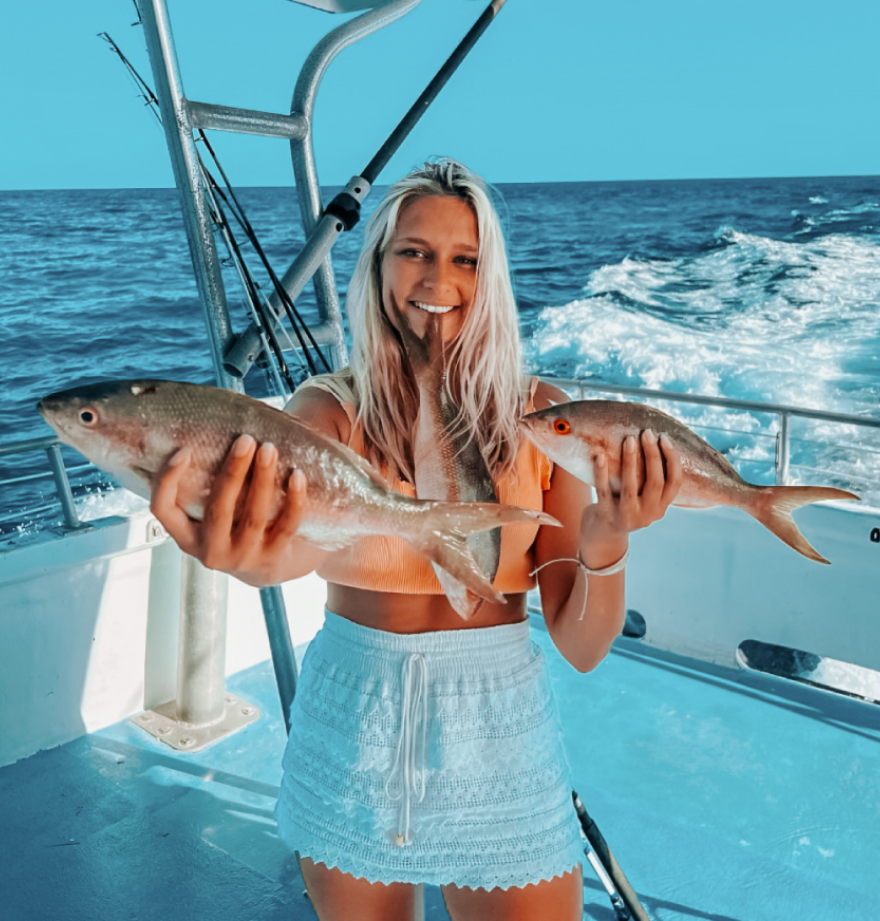
Almost any fish that will take an artificial fly can potentially be targeted with fly-fishing equipment.
Common freshwater targets include:
- Trout
- Bass
- Salmon
- Steelhead
- Panfish
- Carp
- Pike
Saltwater fly anglers may target:
- Tarpon
- Bonefish
- Permit
- Redfish
- Striped bass
- Snook
- Various species of tuna and other predatory fish
The rod, line, leader, and fly need to be appropriate for the target species.
Why Do People Enjoy Fly Fishing?
There is no single reason people become interested in fly fishing.
For some, it is the casting itself. A well-timed cast can feel smooth and satisfying.
For others, it is the process of studying the water and figuring out what fish are eating.
Fly fishing can also encourage anglers to pay close attention to their surroundings. In a river, this might mean looking for insects, watching current patterns, or noticing where fish are holding.
There is also a strong element of patience. Fish may not cooperate every time, and learning to accept slow periods is part of fishing in general.
What Is Matching the Hatch?
“Matching the hatch” means choosing a fly that resembles the insects fish are currently feeding on.
For example, if trout are feeding heavily on a particular type of mayfly, an angler may select a fly that closely resembles that insect.
Matching the hatch does not always mean finding an exact imitation. Size, color, shape, and movement can all influence how closely a fly resembles natural food.
The concept is particularly important in trout fishing, where insect activity can have a noticeable effect on feeding behavior.
What Is Catch and Release Fly Fishing?
Catch and release means returning a fish to the water after catching it rather than keeping it.
Many anglers choose catch and release for conservation reasons, while some fisheries have regulations requiring the release of certain fish or fish of particular sizes.
If releasing a fish, handling it carefully is important.
Wet your hands before touching the fish, keep it out of the water for as little time as possible, and use appropriate tools to remove the hook.
Local fishing regulations should always be checked because rules differ by location.
Do You Need Waders for Fly Fishing?
No.
Waders are useful when fishing in deeper or colder water, but they are not required for every type of fly fishing.
Many anglers fish from shore or stay in shallow water wearing regular outdoor clothing and suitable footwear.
Waders can also provide protection from cold water and wet conditions, but they need to be used carefully. Entering deep or fast-moving water can be dangerous, regardless of whether you are wearing waders.
Is Fly Fishing Hard to Learn?
The basics are relatively easy to understand, but becoming highly skilled takes practice.
The casting motion is often the first challenge. Beginners may also need time to learn how to choose flies, read water, manage line, and present the fly naturally.
You do not need to master every technique before catching fish.
Starting with a simple setup, practicing basic casting, and spending time on the water can help you improve naturally.
A short lesson with an experienced instructor can also help correct casting habits before they become difficult to change.
What Is the Best Fly Rod for Beginners?
For general freshwater fishing, a 5-weight rod around 9 feet long is a common starting point.
It provides a useful balance between casting ease, versatility, and the ability to handle a variety of freshwater fish.
However, the best rod depends on where you plan to fish.
A small mountain stream may be better suited to a shorter and lighter rod. Someone planning to target large saltwater fish will need a much heavier setup.
The fishing environment should therefore be considered before buying equipment.
What Should a Beginner Bring Fly Fishing?
A simple beginner kit can include:
- Fly rod
- Fly reel
- Matching fly line
- Leader
- Tippet
- Selection of flies
- Nippers
- Forceps
- Landing net
- Polarized sunglasses
- Appropriate clothing
- Fishing license where required
A small fly box is useful for keeping different patterns organized.
Polarized sunglasses can help reduce glare and make it easier to see into the water. They also provide protection from stray hooks.
Basic Fly Fishing Tips for Beginners
Start with the basics rather than trying to learn every technique at once.
Practice casting before fishing. A little practice on grass can make your first time on the water less frustrating.
Watch the water. Look for insects, rising fish, current changes, structure, and areas where fish might find food or shelter.
Keep your movements controlled. Fast and forceful casting is not always better.
Learn one or two knots well. A few reliable knots are more useful than knowing many knots poorly.
Use a simple fly selection. You do not need hundreds of patterns when starting.
Learn local regulations. Fishing seasons, licenses, size limits, and catch-and-release requirements vary between locations.
Be patient. Some days produce more fish than others. Time on the water is part of learning.
Is Fly Fishing Expensive?
It can be, but it does not have to be.
Entry-level fly-fishing equipment is available at different price points. A basic setup can provide everything needed to learn the fundamentals.
Costs can increase as anglers become more interested in specialized rods, reels, lines, flies, waders, boats, travel, and other equipment.
It is usually better for a beginner to start with a straightforward setup rather than buying a large collection of specialized gear.
FAQs About Fly Fishing
Do you need live bait for fly fishing?
No. Fly fishing normally uses artificial flies designed to imitate insects, baitfish, crustaceans, and other food that fish may eat.
Can you fly fish from the shore?
Yes. You can fly fish from riverbanks, lake shores, beaches, and other accessible areas where local fishing rules allow it.
What time of day is best for fly fishing?
There is no single best time. Early morning and evening can be productive, but fish activity depends on the species, weather, water temperature, and available food.
Can beginners learn fly fishing on their own?
Yes. Beginners can learn the basics through practice and reliable instruction. Taking a lesson can also help develop good casting technique.
How long does it take to learn fly casting?
Basic casting can be learned fairly quickly, but becoming comfortable and accurate takes regular practice.
Can you fly fish in the rain?
Yes. Rain does not automatically stop fly fishing. In some conditions, rain can even change insect activity and fish behavior.
Do you need a special license for fly fishing?
In most places, you need to follow the same fishing licensing requirements that apply to other types of fishing. Local rules vary by location.
Can you fly fish at night?
Yes, certain species can be targeted after dark, although night fishing requires different techniques and additional attention to safety.
What should you wear while fly fishing?
Comfortable outdoor clothing, suitable footwear, and polarized sunglasses are useful. Waders may be appropriate when entering cold or deeper water.
Is fly fishing only for catching trout?
No. Trout are strongly associated with fly fishing, but fly anglers also target bass, salmon, carp, panfish, tarpon, bonefish, redfish, and many other species.
Conclusion
Fly fishing is a method of fishing that uses a weighted fly line to cast a lightweight artificial fly. The fly may imitate insects, baitfish, crustaceans, or other food that fish naturally eat.
Although the equipment and casting style are different from conventional fishing, the basic goal is the same: present something that interests a fish, get it to take the offering, and land it safely.
Fly fishing can take place in small streams, large rivers, lakes, ponds, and saltwater. Different environments call for different rods, lines, flies, and techniques.
For beginners, the easiest approach is to start with the basics. Learn how the rod and line work together, practice the overhead cast, understand a few common fly types, and spend time observing the water.
You do not need to know everything before you start. Fly fishing is a skill that develops through practice, observation, and experience. Over time, the equipment becomes easier to understand, casting becomes more natural, and reading the water becomes part of the fun.