One of the most common questions anglers ask is, “How can I attract fish faster?” Whether you are fishing from a boat, dock, shoreline, pier, kayak, or flat skiff, attracting fish quickly can significantly improve your chances of success.
While there is no magic trick that guarantees instant bites, experienced anglers know that certain techniques, baits, locations, and environmental factors can dramatically increase fish activity around your fishing area. Understanding what fish eat, where they feed, and how they respond to water conditions can help you catch more fish in less time.
In this guide, you will learn proven methods for attracting fish faster, choosing the right bait, finding productive fishing spots, using fish attractants, and avoiding common mistakes that scare fish away.
Why Attracting Fish Matters
Fish do not constantly swim around looking for your bait.
Most species spend their time:
- Searching for food
- Avoiding predators
- Conserving energy
- Following water currents
- Seeking comfortable temperatures
The goal is to make your bait or lure appear more appealing than everything else available in the water.
When fish notice food, scent, movement, or activity nearby, they are more likely to investigate and strike.
What Attracts Fish the Fastest?
Several factors naturally attract fish.
These include:
- Food scent
- Movement
- Sound vibrations
- Water currents
- Structure
- Light
- Feeding activity
Combining multiple attraction methods often produces the best results.
Use Live Bait Whenever Possible
Live bait remains one of the fastest ways to attract fish.
Natural movement and scent make live bait difficult for fish to ignore.
Popular live baits include:
- Shrimp
- Minnows
- Shiners
- Worms
- Crickets
- Pilchards
- Finger mullet
Live bait creates vibrations and movement that trigger feeding instincts.
Many experienced anglers use live bait when they need quick action.
Match the Local Food Source
Fish are more likely to eat something they recognize.
Observe the area and determine what fish are feeding on naturally.
Common food sources include:
- Small baitfish
- Shrimp
- Crabs
- Insects
- Worms
Using bait or lures that resemble local prey can significantly increase strikes.
Use Fish Attractants
Fish attractants are scents designed to encourage fish to investigate your bait.
Many products contain ingredients that mimic natural prey.
Popular attractants are available as:
- Sprays
- Gels
- Liquids
- Soft bait coatings
These products can be especially effective when fish are inactive or pressured.
Chumming Can Bring Fish to Your Area
Chumming involves placing small pieces of bait into the water to create a scent trail.
The scent travels through the current and attracts nearby fish.
Common chum materials include:
- Ground baitfish
- Chopped shrimp
- Menhaden products
- Commercial chum blocks
Saltwater anglers frequently use chum to attract species such as:
- Snapper
- Grouper
- Tarpon
- Sharks
- Mackerel
Freshwater anglers may also use chum for certain species.
Fish During Feeding Times
Timing can greatly affect success.
Fish are generally more active during:
Early Morning
Many species feed aggressively around sunrise.
Cooler temperatures often increase activity.
Late Afternoon
Fish frequently become active again before sunset.
Tidal Changes
In coastal areas, moving water often stimulates feeding behavior.
Incoming and outgoing tides can both create productive fishing conditions.
Fish Around Structure
Fish are naturally attracted to structure.
Structure provides:
- Protection
- Shade
- Food sources
- Ambush opportunities
Look for:
- Docks
- Bridges
- Mangroves
- Rock piles
- Fallen trees
- Grass beds
- Reefs
Areas with structure often hold more fish than open water.
Use Bright or Natural Lures Based on Water Conditions
Lure color can affect visibility.
In Clear Water
Natural colors often perform best.
Examples include:
- Silver
- White
- Brown
- Green
In Murky Water
Brighter colors can help fish locate the lure.
Examples include:
- Chartreuse
- Pink
- Orange
- Bright yellow
Choosing the right color improves visibility and attraction.
Create Movement
Movement is one of the strongest fish triggers.
Fish often react to:
- Erratic motion
- Flashing action
- Darting movement
- Surface disturbance
Different lure retrieves can help create these effects.
Experiment until you discover what fish prefer on a particular day.
Fish Near Bait Schools
Where there is bait, there are often predators.
Watch for:
- Schools of baitfish
- Shrimp activity
- Surface disturbances
- Diving birds
Predatory fish frequently gather near food sources.
Finding bait often means finding fish.
Use Sound and Vibration
Many fish detect vibration through their lateral line system.
Lures that create vibration can attract fish from greater distances.
Examples include:
- Spinnerbaits
- Chatterbaits
- Crankbaits
- Popping corks
These lures help fish locate your presentation even in poor visibility.
Fish Moving Water
Moving water brings food to fish.
Productive areas include:
- Current seams
- River mouths
- Creek entrances
- Tidal channels
Fish often position themselves where currents naturally deliver prey.
Pay Attention to Water Temperature
Fish are cold-blooded animals.
Their activity levels depend heavily on water temperature.
When temperatures are comfortable, fish are generally:
- More active
- More aggressive
- More willing to feed
Monitoring temperature can help identify productive areas.
Use Fresh Bait
Fresh bait usually produces better results than old bait.
Fresh bait provides:
- Stronger scent
- Better appearance
- More natural texture
Fish often recognize deteriorating bait and may avoid it.
Try Topwater Lures
Topwater lures create surface commotion that attracts attention.
These lures can trigger explosive strikes from:
- Bass
- Snook
- Redfish
- Pike
- Striped bass
Topwater fishing is often most effective during low-light conditions.
Fish Around Lights at Night
Artificial lights attract small organisms.
These organisms attract baitfish.
Baitfish attract larger predators.
Night fishing near lights can be highly productive.
Popular locations include:
- Marinas
- Docks
- Bridges
- Canal systems
The food chain often develops around illuminated areas.
Use the Right Hook Size
An oversized hook can reduce bites.
A hook that is too small may not properly hold larger fish.
Matching hook size to bait size creates a more natural presentation.
This can improve both strike rates and hookups.
Stay Quiet
Fish can detect disturbances in the water.
Excessive noise may scare fish away.
Avoid:
- Slamming hatches
- Dropping equipment
- Loud conversations
- Sudden boat movements
Quiet anglers often experience better results.
Fish During Cloudy Conditions
Cloud cover can increase fish activity.
Reduced sunlight often encourages fish to move into shallower areas.
Many species become less cautious under cloudy skies.
This can create excellent feeding opportunities.
Target Areas With Oxygen-Rich Water
Fish require oxygen to survive.
Areas with higher oxygen levels often attract more fish.
Examples include:
- Waterfalls
- Rapids
- Aerated ponds
- Windblown shorelines
These locations often support increased feeding activity.
Use Artificial Lures That Match Local Prey
Successful anglers frequently follow the “match the hatch” principle.
This means using lures that resemble local prey.
Examples include:
- Shad imitations
- Shrimp imitations
- Crawfish imitations
- Minnow imitations
Matching local food sources often increases strikes.
Learn to Read Fish Behavior
Fish constantly provide clues.
Watch for:
- Surface feeding
- Jumping fish
- Swirling water
- Chasing baitfish
Observing fish behavior can help you quickly adjust your strategy.
Common Mistakes That Prevent Fish From Biting
Fishing in the Wrong Location
Even the best bait cannot catch fish where none are present.
Location is often more important than tackle.
Using Old Bait
Fresh bait typically outperforms bait that has been sitting too long.
Fishing Too Fast
Many anglers retrieve lures too quickly.
Slowing down often produces more strikes.
Ignoring Weather Conditions
Weather changes influence fish activity.
Wind, temperature, and cloud cover all affect feeding patterns.
Using the Same Technique All Day
Fish preferences change.
Successful anglers adjust their approach when necessary.
Best Attraction Methods for Freshwater Fish
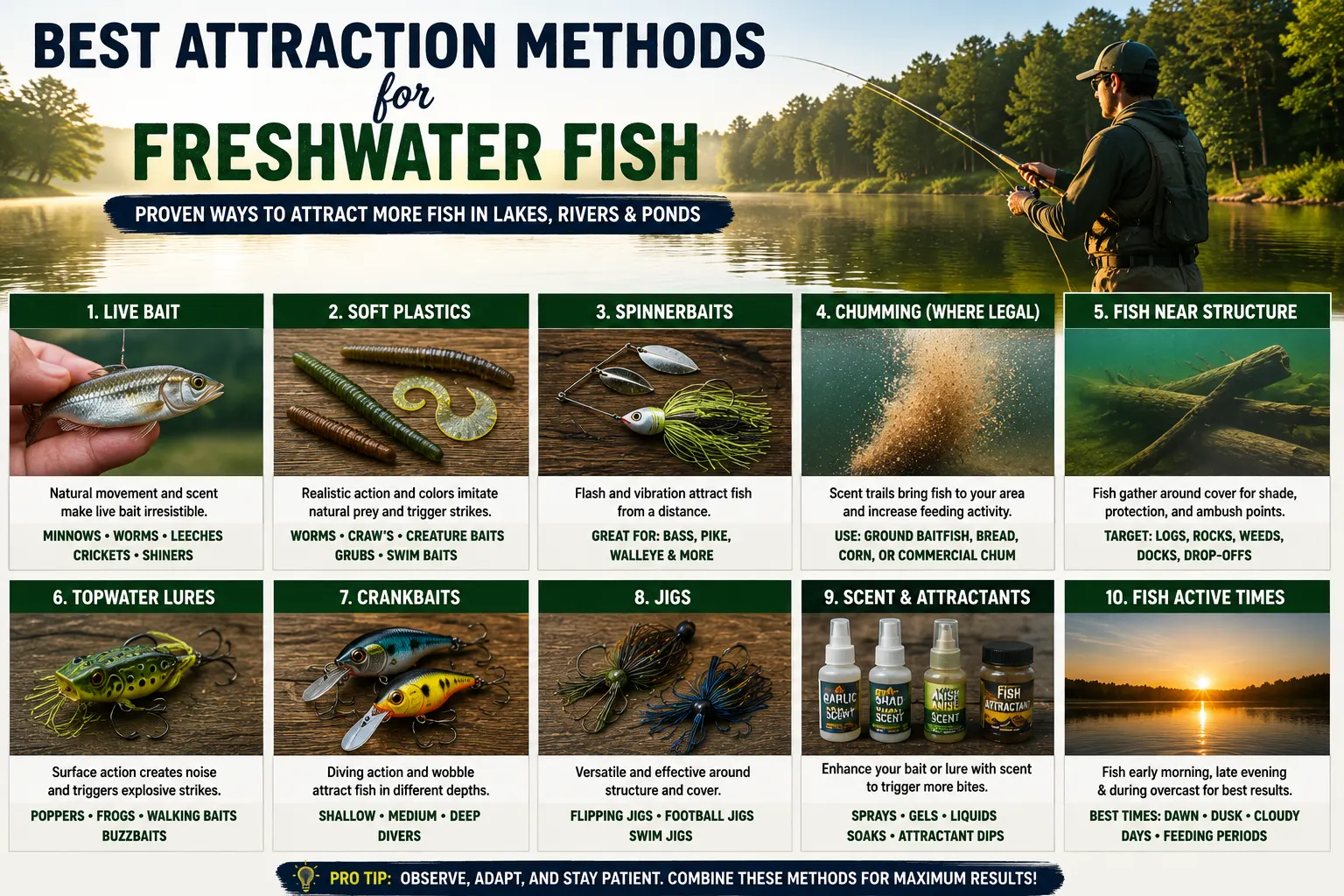
Popular freshwater attraction techniques include:
- Live worms
- Minnows
- Soft plastic baits
- Spinnerbaits
- Chumming where legal
- Fishing near submerged structure
Species such as bass, trout, catfish, and panfish often respond well to these methods.
Best Attraction Methods for Saltwater Fish
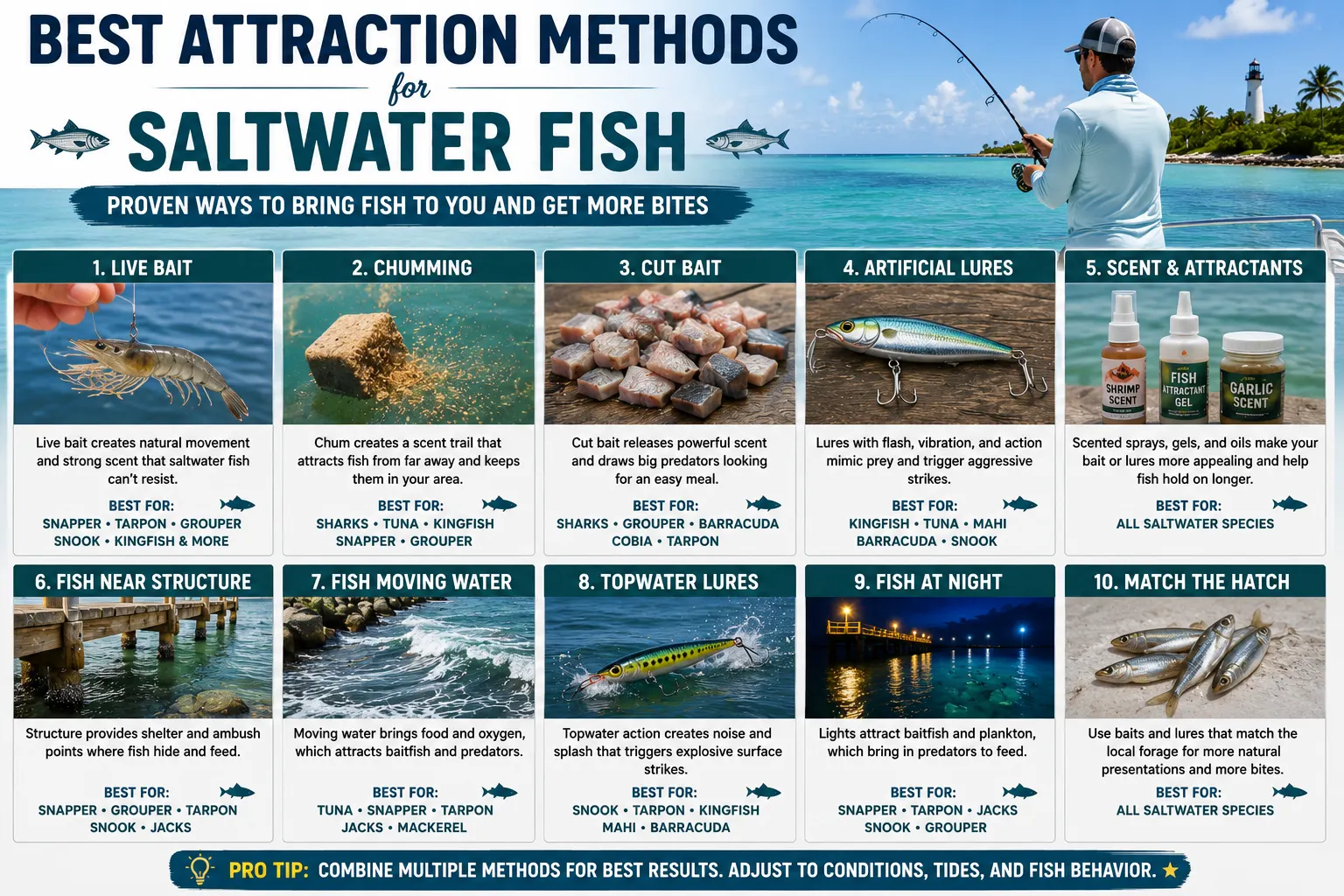
Saltwater anglers frequently use:
- Live shrimp
- Pilchards
- Finger mullet
- Chum
- Popping corks
- Artificial baitfish lures
These methods can attract a wide range of species.
Does Scent Really Help Attract Fish?
Yes. Research and angler experience suggest that scent can encourage fish to investigate bait.
Scent can be especially important when:
- Water visibility is poor
- Fish are inactive
- Competition for food is low
Combining scent with realistic presentation often produces the best results.
How Long Should You Stay in One Spot?
The answer depends on conditions.
If there is:
- No bait activity
- No strikes
- No visible fish
It may be worth moving after 20 to 30 minutes.
Many successful anglers focus on locating active fish rather than waiting for fish to arrive.
Why Fish Attraction Is About More Than Bait
Many beginners believe bait alone catches fish.
In reality, successful fishing involves multiple factors.
These include:
- Location
- Timing
- Water conditions
- Presentation
- Fish behavior
- Weather
When all of these factors work together, attracting fish becomes much easier.
FAQs About How to Attract Fish Faster
Do fish attractants work in cold water?
Yes, scent-based attractants can be effective in cold water when fish are feeding less aggressively.
Does moon phase affect fish activity?
Many anglers believe moon phases can influence feeding behavior, especially around full and new moons.
Can fish smell bait from far away?
Many fish species have a strong sense of smell and can detect food scents from considerable distances.
Is live bait always better than artificial lures?
Not always. Artificial lures can sometimes outperform live bait, especially when they match local prey and are presented correctly.
Does water clarity affect fish attraction?
Yes, clear water often requires more natural presentations, while murky water may require brighter colors and stronger vibrations.
Are fish more active before a storm?
Many anglers report increased feeding activity before approaching weather systems, although conditions vary.
Can lights attract fish during the day?
Lights are generally most effective at night when they attract baitfish and other food sources.
How important is lure retrieval speed?
Retrieval speed can greatly affect success. Fish may prefer slow, moderate, or fast presentations depending on conditions.
Does fishing pressure make fish harder to attract?
Yes, heavily pressured fish often become more cautious and selective.
What is the fastest way to locate active fish?
Look for baitfish activity, birds feeding, moving water, structure, and signs of fish feeding on the surface.
Conclusion
Learning how to attract fish faster can make every fishing trip more productive and enjoyable. While there is no guaranteed way to make fish bite instantly, understanding their behavior, feeding habits, preferred habitats, and activity patterns can significantly improve your success. Using fresh bait, selecting the right lure, fishing during peak feeding times, targeting structure, and paying attention to water conditions are some of the most effective ways to increase fish activity around your fishing area.
The most successful anglers know that attracting fish is a combination of strategy and observation. Fish are constantly responding to factors such as current, water temperature, available food, weather conditions, and tides. By adapting your approach to these conditions, you can spend less time waiting and more time catching fish.
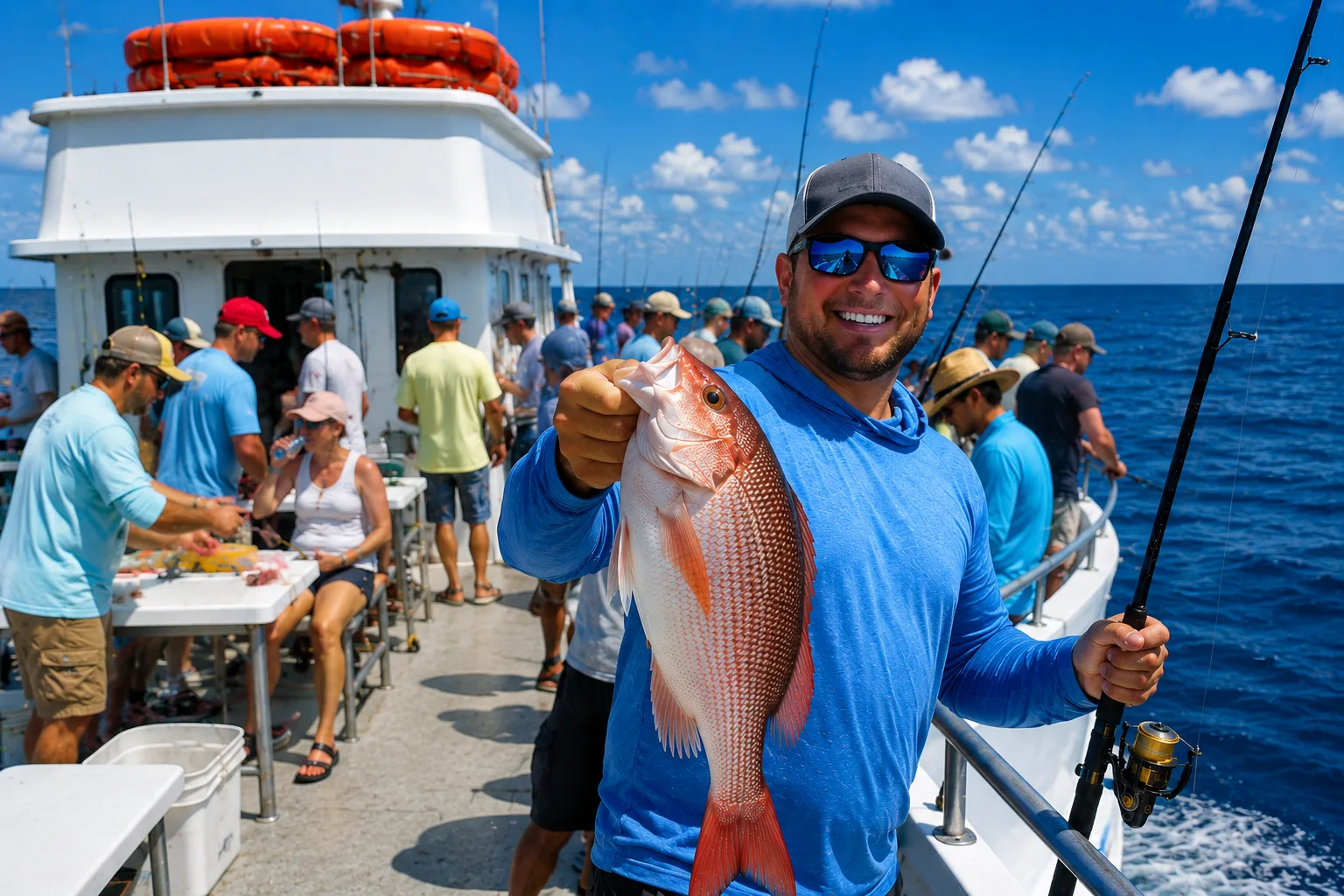
If you are visiting the Florida Keys or already in the area, booking a trip with Captain Michael Party Boat Fishing can be an excellent way to put these techniques into practice. The Florida Keys are known for their diverse fish species, clear waters, reefs, wrecks, and year-round fishing opportunities. An experienced local captain can help you find productive fishing grounds, understand local fish behavior, and maximize your chances of attracting and catching fish throughout your trip.
Whether you are fishing from shore, a dock, a kayak, or a charter boat, the key to attracting fish faster is combining the right location, presentation, timing, and bait selection. With patience and the proper techniques, you can consistently increase your catch rates and enjoy a more successful day on the water.